LAO, Finance split over $25 million Healthy Rivers and Landscapes request
A budget subcommittee hearing exposed a policy dispute over whether to fund the Bay Delta program now or wait until the updated water-quality plan is formally adopted.


A budget subcommittee hearing exposed a policy dispute over whether to fund the Bay Delta program now or wait until the updated water-quality plan is formally adopted.

Finance officials advanced a maximum $125 million climate-bond contribution for the 161-acre shoreline acquisition, but lawmakers raised equity concerns over whether Proposition 4 money should go to park-poor communities instead.

The measure advanced 55-1 and would broaden the Legislature's role in appointing commissioners while shifting broadband oversight away from the utilities regulator.

AB 2274 cleared the Assembly 64-0 after being described on the floor as closing an “Epstein loophole.”

The Assembly unanimously approved ACR 195 during a ceremonial floor session honoring Jewish American Heritage Month.

AB 1768 cleared the Assembly 54-12 as lawmakers cited $1.6 billion in withheld Medicaid reimbursements and said local governments need more room to respond to the pressure.

At a May 14 hearing, advocates pressed for $40 million for a performing arts payroll fund and $50 million for the California Arts Council as the state’s creative economy plan moved toward implementation.

The resolution passed after a 42-18 vote to suspend the rules and a final 58-8 vote, with 57 co-authors added during the floor session.

The commission adopted a narrower approach in Liberty Utilities’ general rate case for Park Water and Apple Valley Ranchos, favoring used-and-useful recovery rules and a 45/55 fixed-variable split.

Commissioners voted 5-0 to deny a petition that sought to reopen the closed San Joaquin Valley proceeding or force a new phase-three rulemaking.

The committee moved dozens of bills forward on May 14 while setting aside several measures, including proposals on food additives, drug formularies, medical debt relief and a guaranteed income pilot.

At an Assembly hearing on the SB 254 report, wildfire survivors urged faster compensation and emergency housing relief financed by utilities rather than taxpayers.
A joint Assembly oversight hearing raised questions about whether California’s crisis line system is fully meeting its promise, while DHCS disclosed more than 74,000 988 contacts in March and said unanswered contacts go to out-of-state backup centers.

The utility-affordability and wildfire-compensation bill drew lengthy public comment from Camp Fire and Tubbs Fire survivors in the Assembly Appropriations Committee, but no recorded vote appeared in the excerpted hearing record.
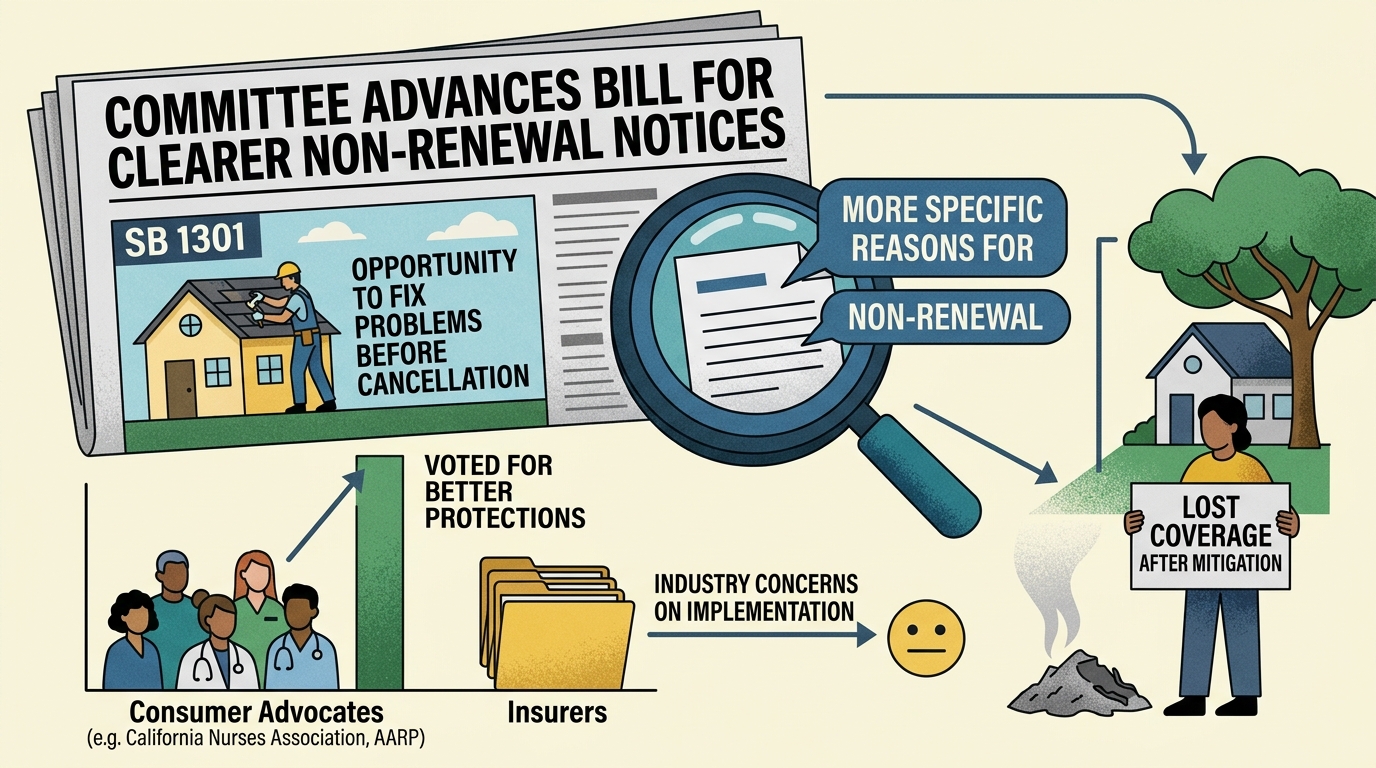
AB 2038 moved on the Assembly floor May 11, extending post-wildfire insurance protections for homeowners facing cancellation pressure after a disaster.

At a budget subcommittee hearing, Inspector General Ben Bellenapp asked lawmakers to spell out when his office can publish reports, keep work papers and review draft rail agreements.

The bill passed the Assembly floor on May 11 and would strengthen the Secretary of State’s election cybersecurity unit while expanding its ability to consult with researchers.

The Assembly formally took up the resolution on May 11 as part of a floor session that also featured election debate and other policy votes.

AB 108 cleared the Assembly on May 7, authorizing one-time emergency grants for hospitals at risk of closing.

AB 1608 cleared the Assembly 45-18 on May 4 after lawmakers split over whether it would improve public transparency or expand confidentiality around the High-Speed Rail Authority inspector general.

Assembly budget lawmakers heard competing proposals for scaling wildfire mitigation, including whether California should keep relying on large subsidies or shift toward smaller grants, loans and insurance-linked incentives.

A California oversight official told lawmakers investigators found more than a dozen branded stations charging $2 to $3 above the statewide average, and some lowered prices after regulator contact.

The measure cleared the Housing and Community Development Committee after testimony on Santa Clara County's prevention system and a broader debate over prevention versus shelter costs.

The Communications and Conveyance Committee voted 7-0 to send the bill to Appropriations after an extended hearing, while stressing that it would only ask federal officials to approve the change.