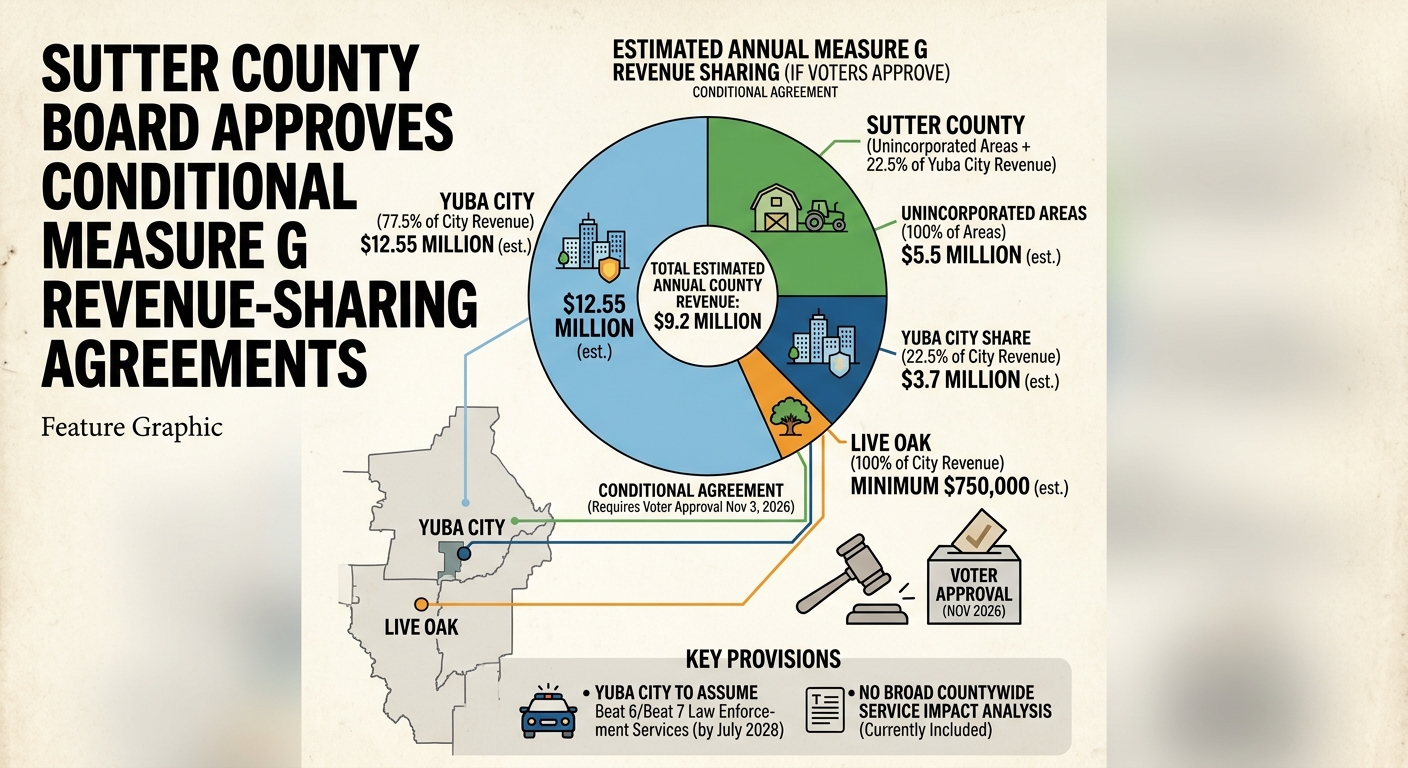
The Sutter County Board of Supervisors unanimously approved agreements Sept. 8 that would divide revenue from the county’s proposed Measure G sales tax among the county, Yuba City and Live Oak — but only if voters approve the measure on Nov. 3, 2026.
The board’s summary of proceedings says the agreements with both cities and related resolutions were adopted unanimously by the three supervisors present. Two supervisors were absent. Members of the public spoke both against and in favor of Measure G during the meeting.
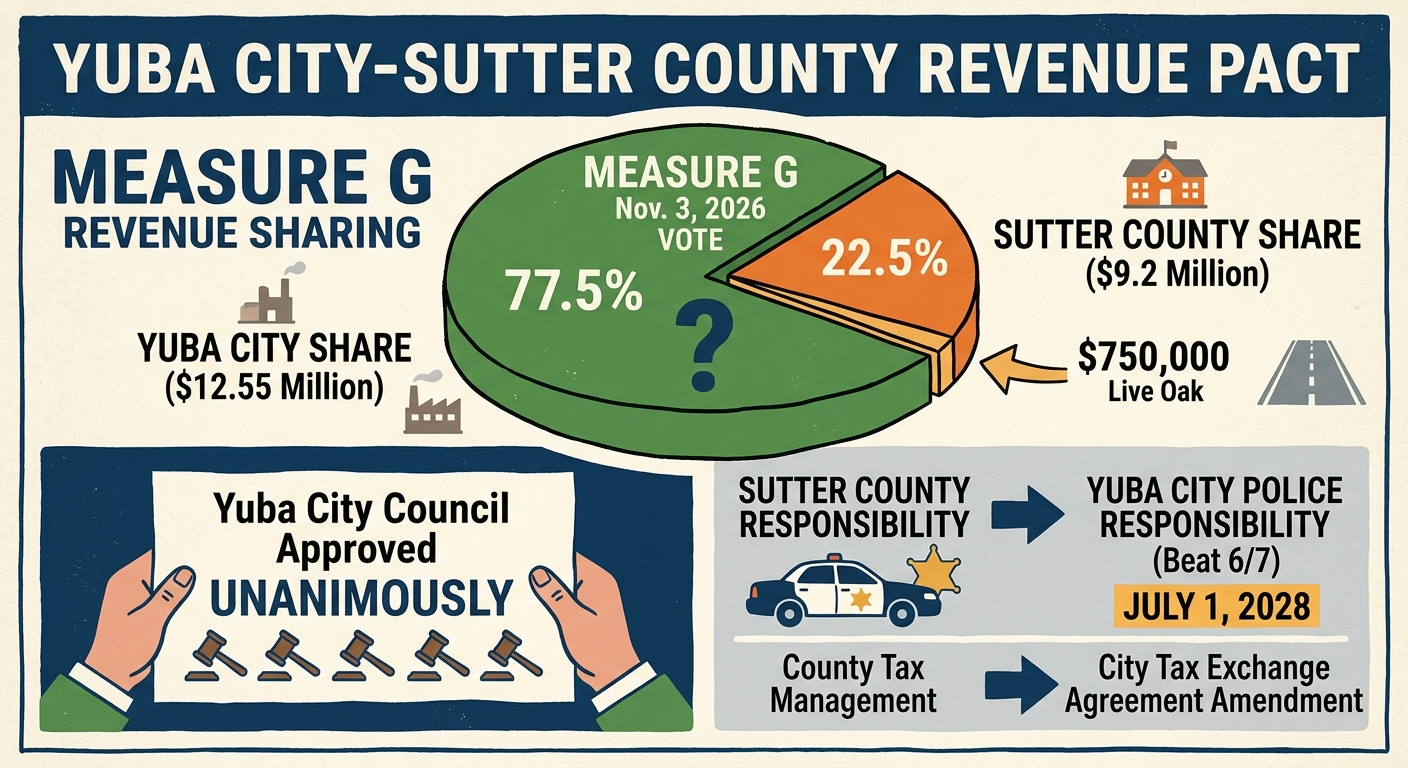
Measure G is a proposed 1% countywide transactions-and-use tax. Under the terms described in the Sept. 8 agenda packet, Sutter County would retain all estimated tax revenue generated in unincorporated areas — about $5.5 million annually — and 22.5% of estimated revenue generated in Yuba City, or about $3.7 million. The county’s estimated annual total would be $9.2 million.
Yuba City would receive 77.5% of the tax revenue generated within the city, estimated in the packet at about $12.55 million annually. In exchange for the revenue-sharing framework, the Yuba City Police Department would assume responsibility no later than July 1, 2028, for law-enforcement services in the area known under the 2000 Master Tax Exchange Agreement as Beat 6 in Yuba City and Beat 7 in the county. The packet says the Sutter County Sheriff’s Office would continue providing services and bill the city for actual costs if Yuba City had not taken over by that date.
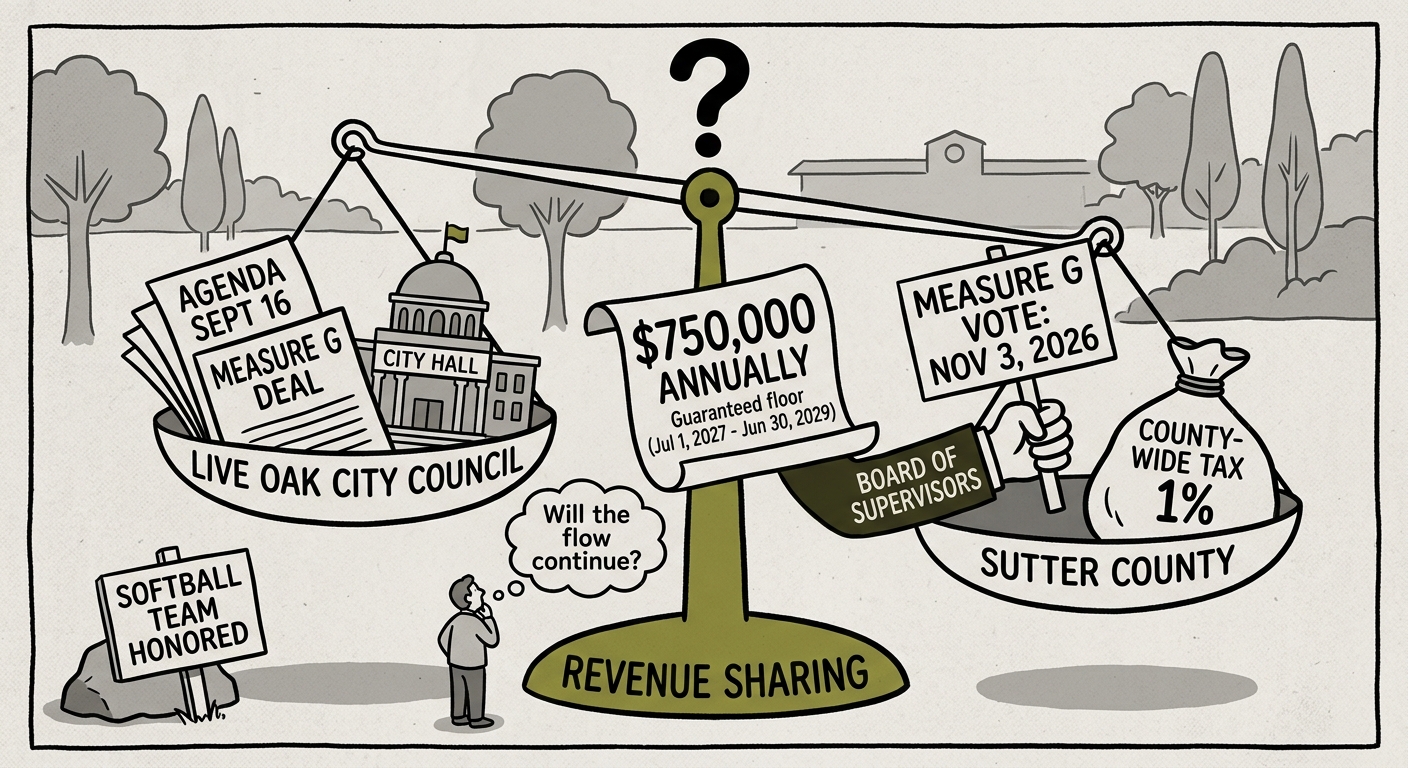
Live Oak would receive all tax revenue generated within the city, with a minimum payment of $750,000 annually from July 1, 2027, through June 30, 2029. The agreement also provides for an earlier partial-period payment beginning April 1, 2027, and says Live Oak would receive the full amount generated if its annual revenue exceeded $750,000.
The agreements do not mean Measure G has passed. They are expressly contingent on voter approval and enactment. The county packet says the city administrators would present the final agreements to their respective councils for consideration. The documents do not provide a broader countywide analysis of service impacts or establish how the Beat 6/7 transition would be staffed and funded.