
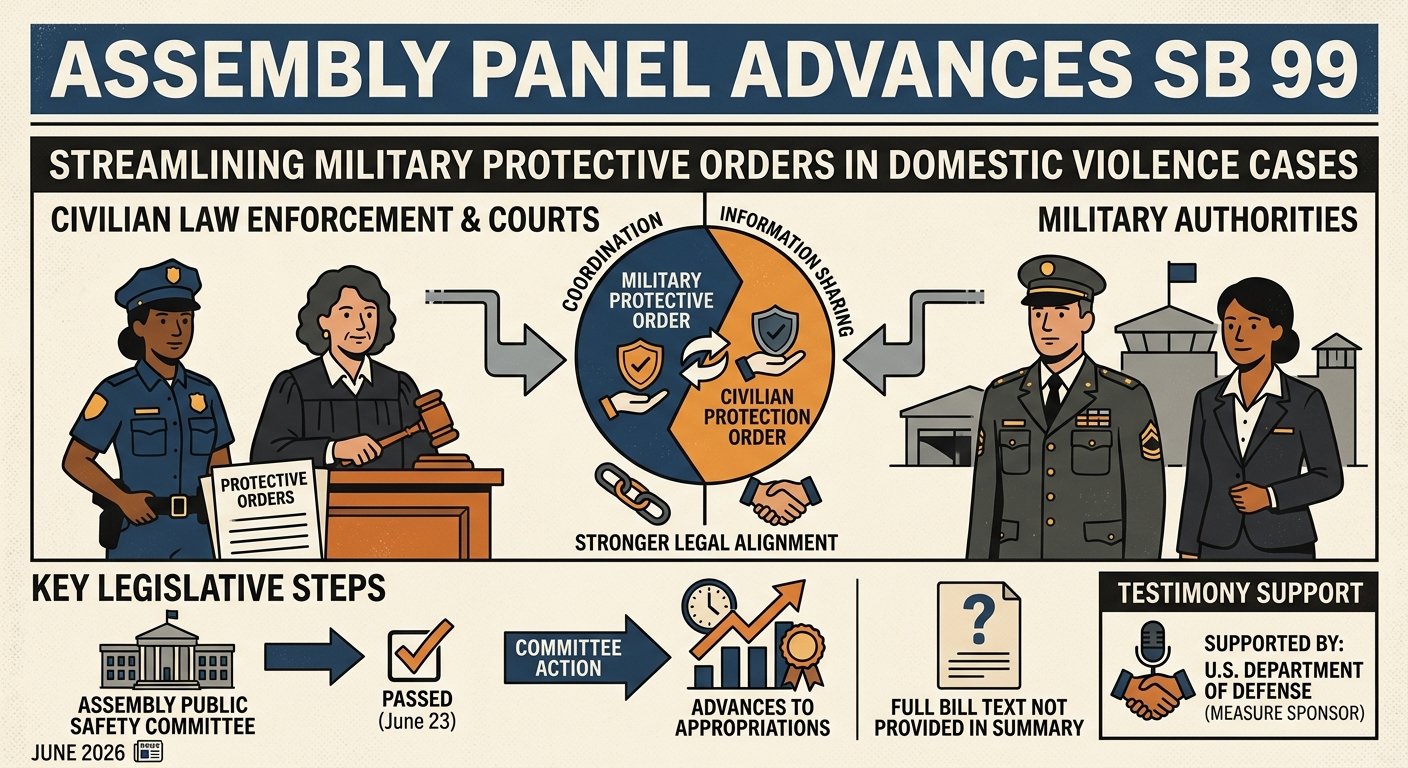
Assembly panel advances SB 99 on military protective orders in domestic violence cases
The committee sent the bill to Appropriations after hearing support from the U.S. Department of Defense and other advocates.
The Sidekick4 months ago
Yuba-Sutter
The committee sent the bill to Appropriations after hearing support from the U.S. Department of Defense and other advocates.
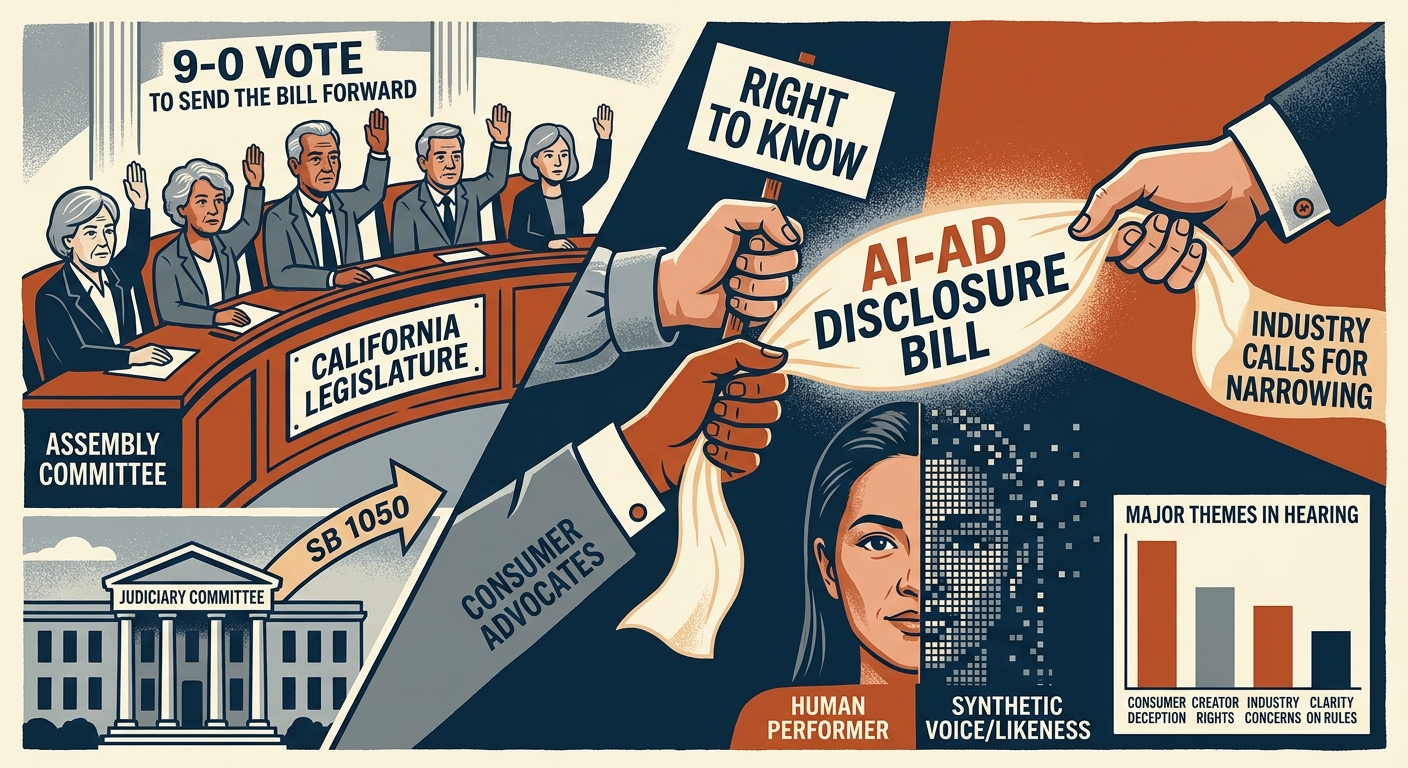
SB 1050 advanced on a 9-0 vote after testimony centered on whether video and audio commercials should disclose AI-generated voices or likenesses.
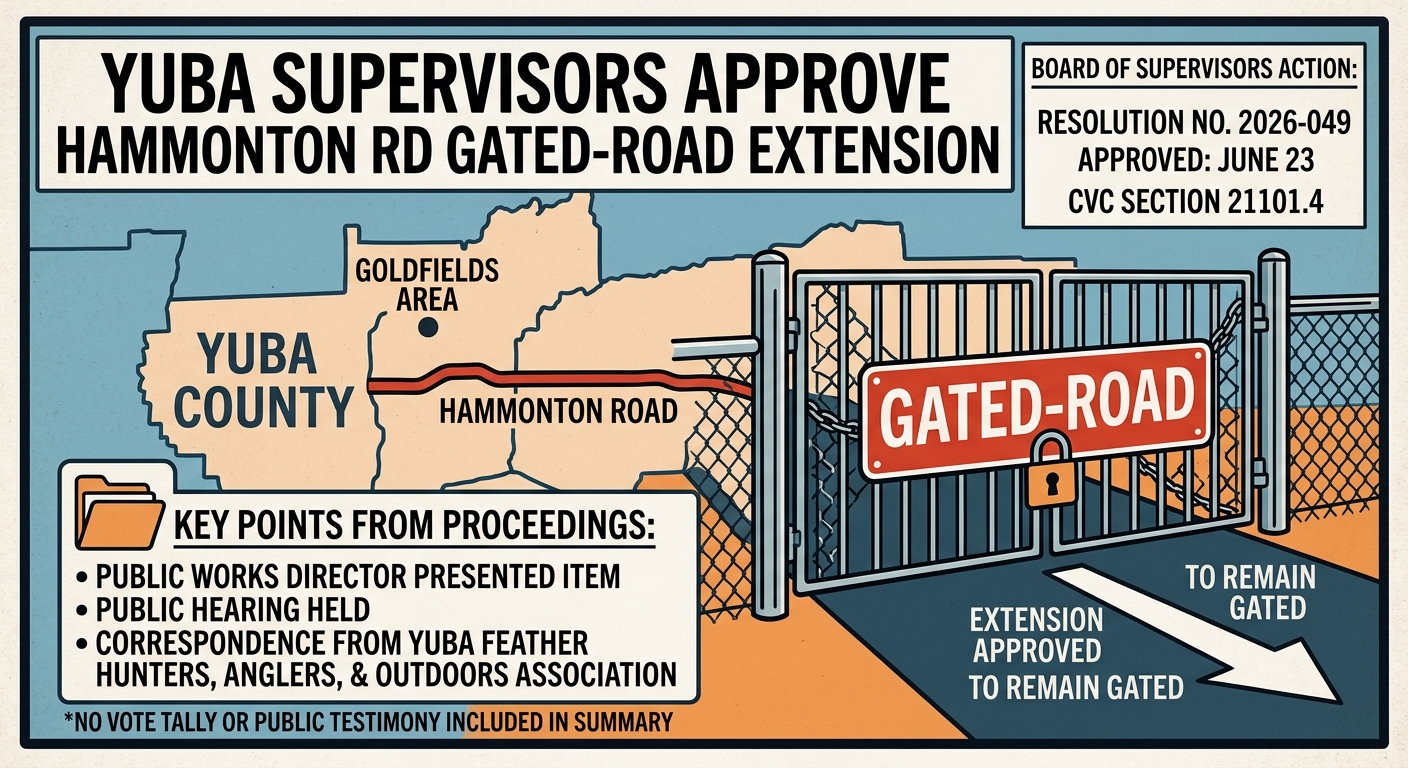
The board adopted a public-hearing resolution letting Hammonton Road in the Goldfields remain gated under state vehicle code.
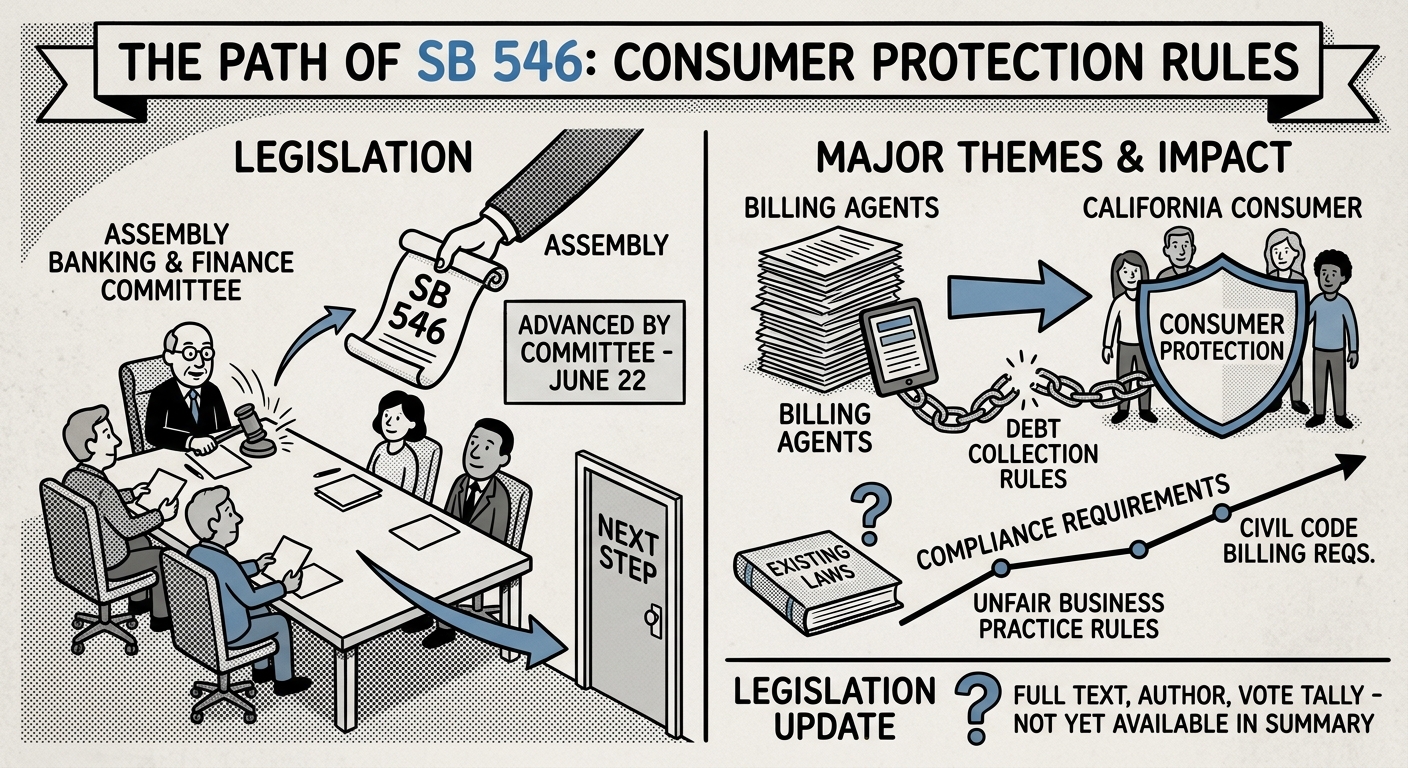
The Banking and Finance Committee moved the bill forward June 22 after testimony that it would keep billing agents under California consumer-protection and debt-collection limits.
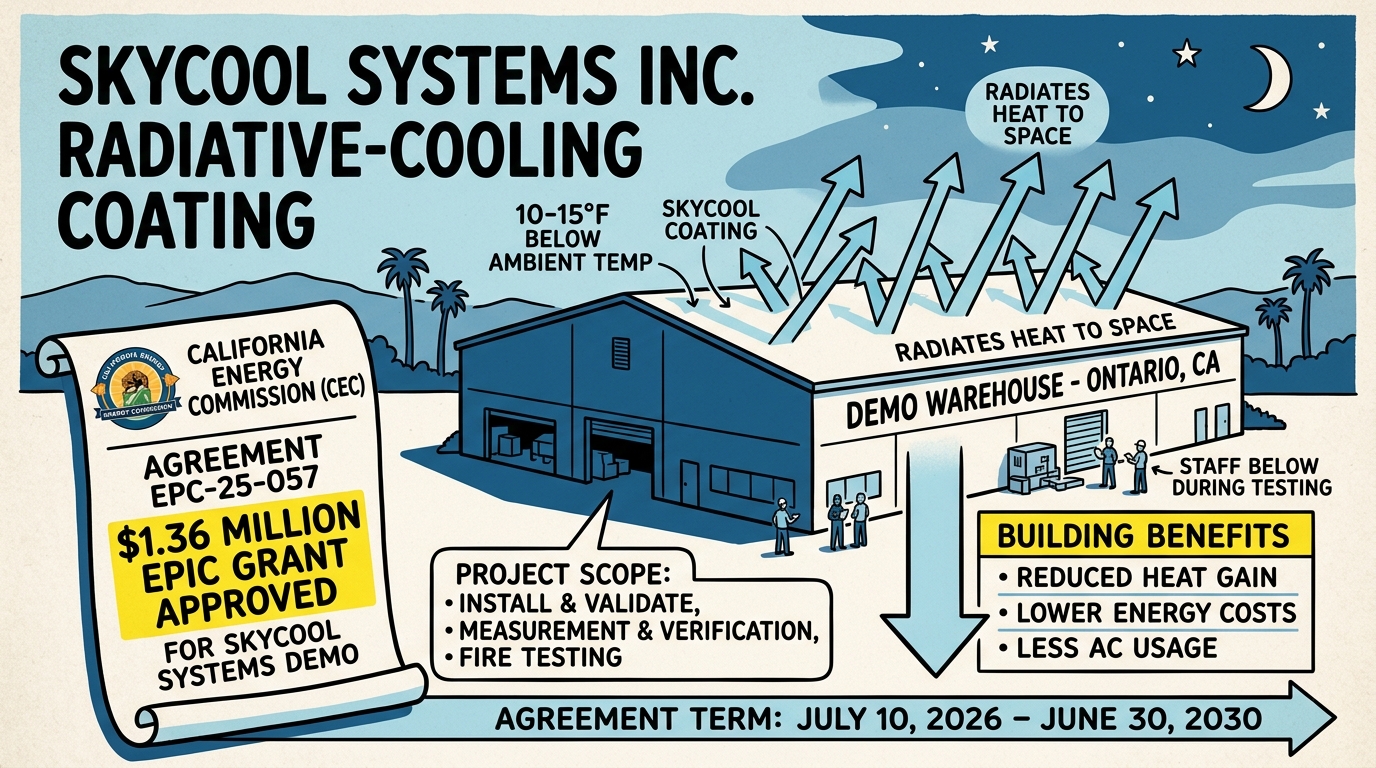
The June 22 business-meeting materials propose approval of an EPIC grant to test a thin-film coating on one Ontario commercial building.
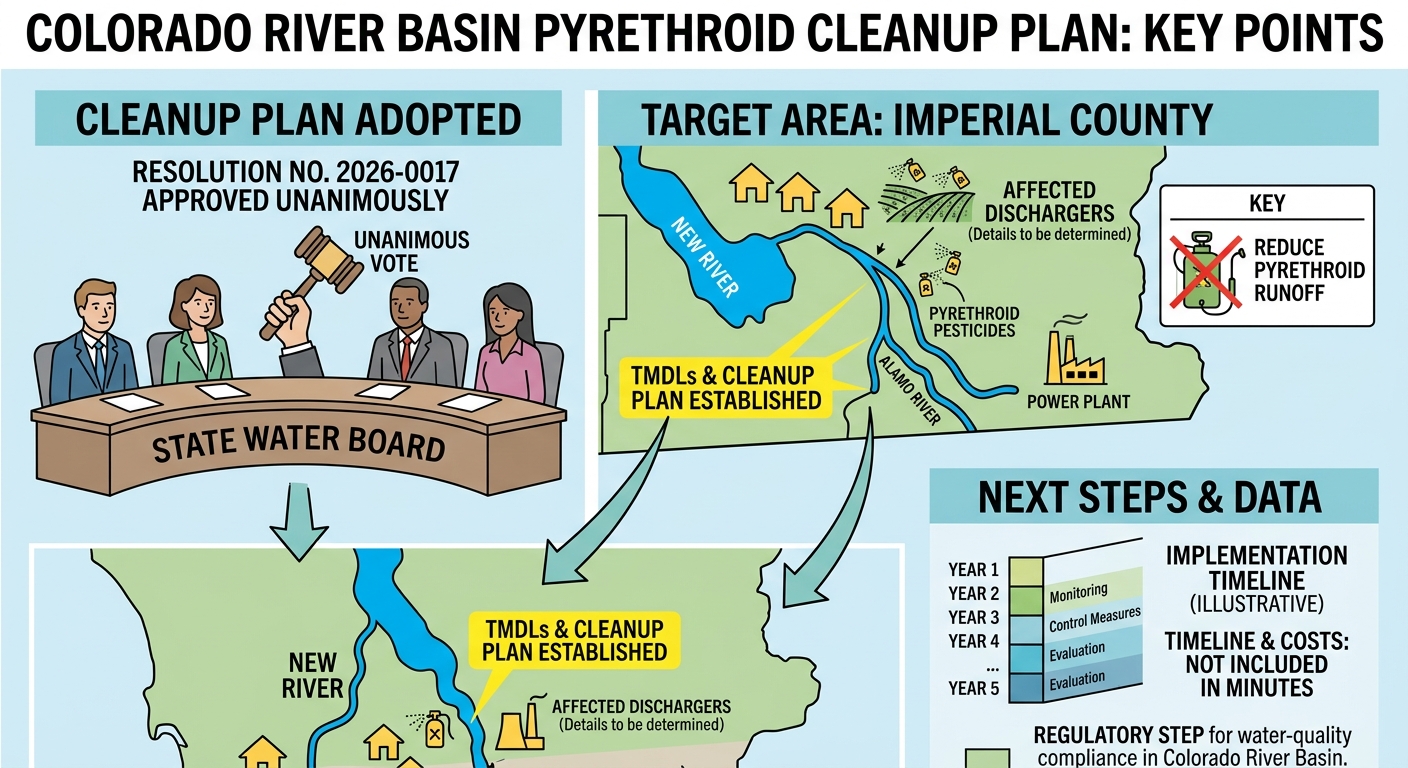
The board unanimously approved a resolution establishing TMDLs and an implementation plan for pyrethroid pesticides in the Alamo River and New River.
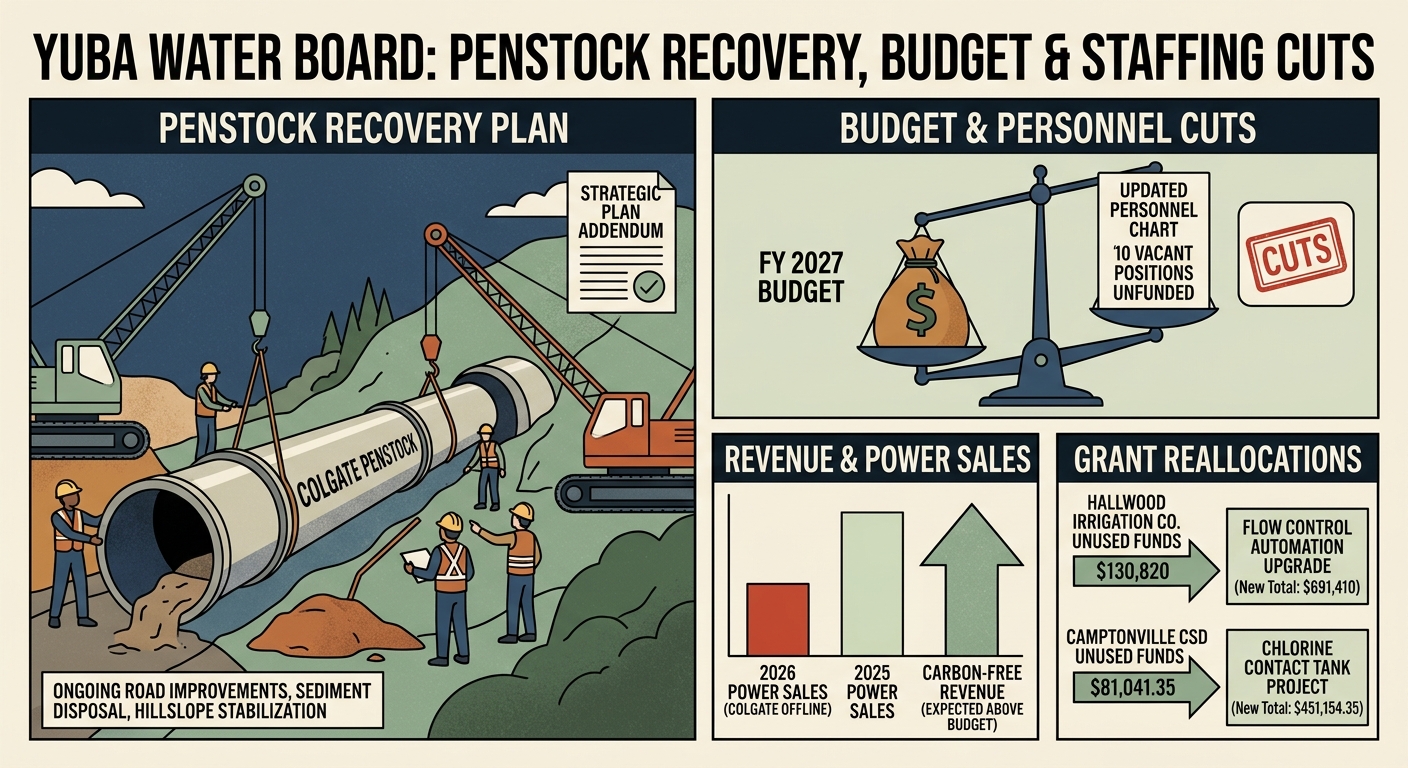
The board backed emergency contracting for Colgate Penstock repairs, adopted a recovery addendum, passed the FY 2026-27 budget and left 10 vacant positions unfunded.
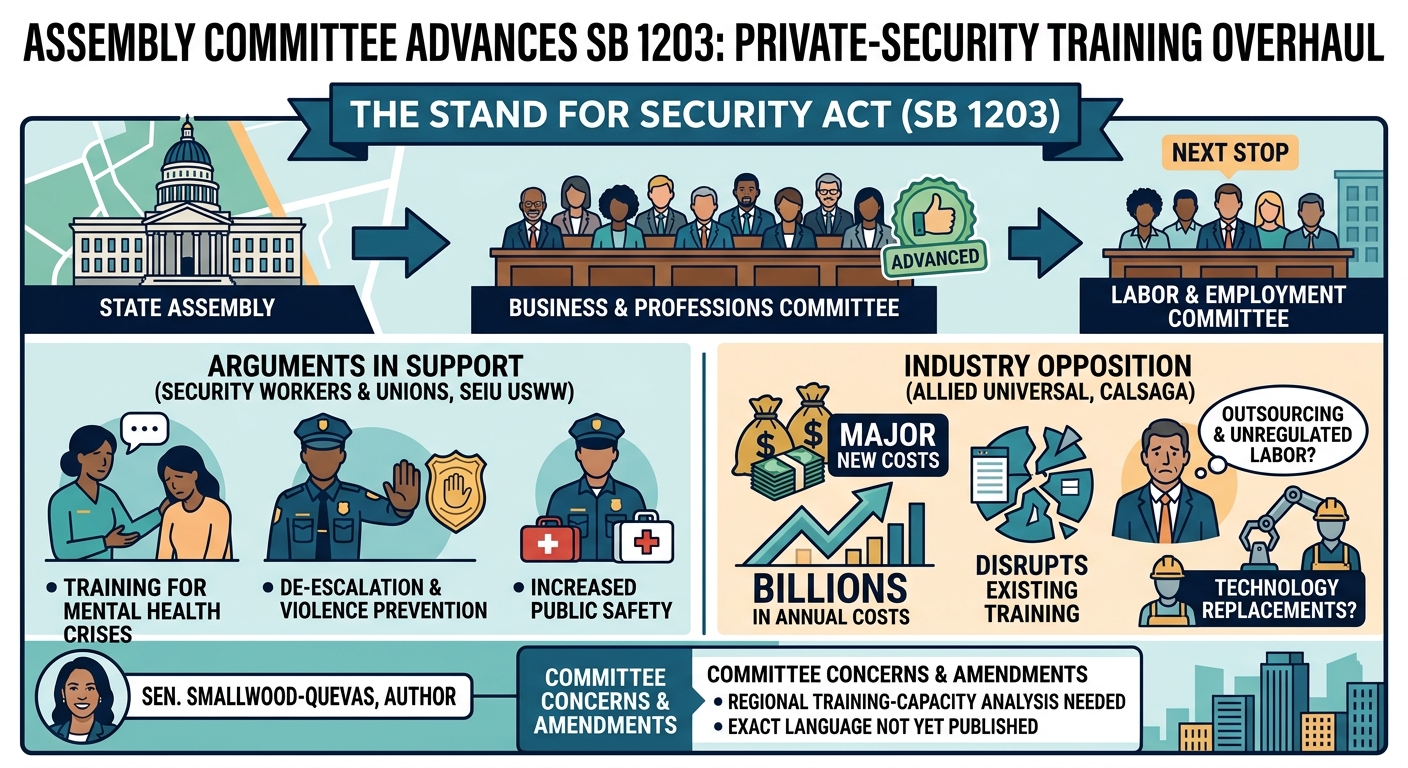
SB 1203 cleared the Assembly Business and Professions Committee and moved to Labor and Employment after testimony from security workers, labor allies and industry opponents.
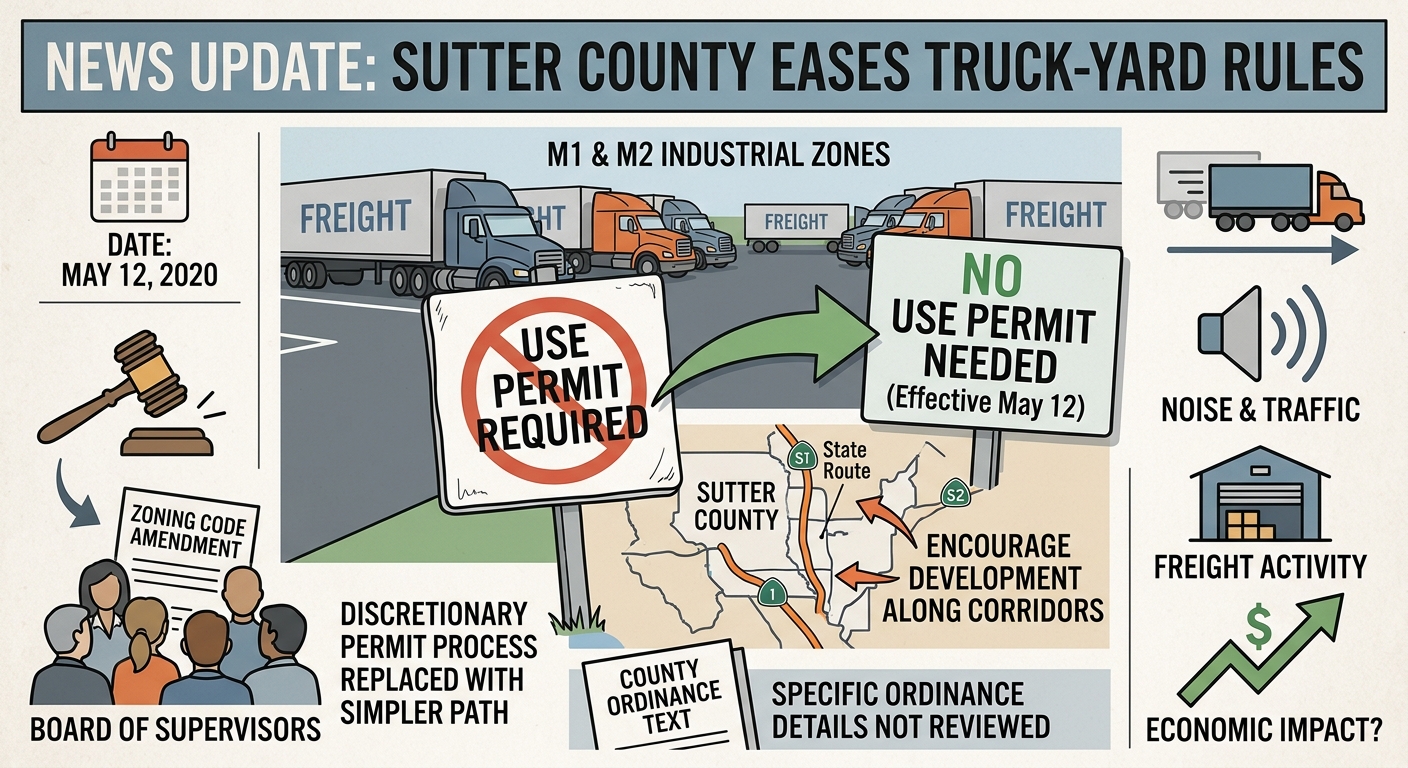
At a May 20 planning meeting, staff said the Board of Supervisors had removed the use-permit requirement for truck yards in M1 and M2 zones, shifting them toward by-right development.
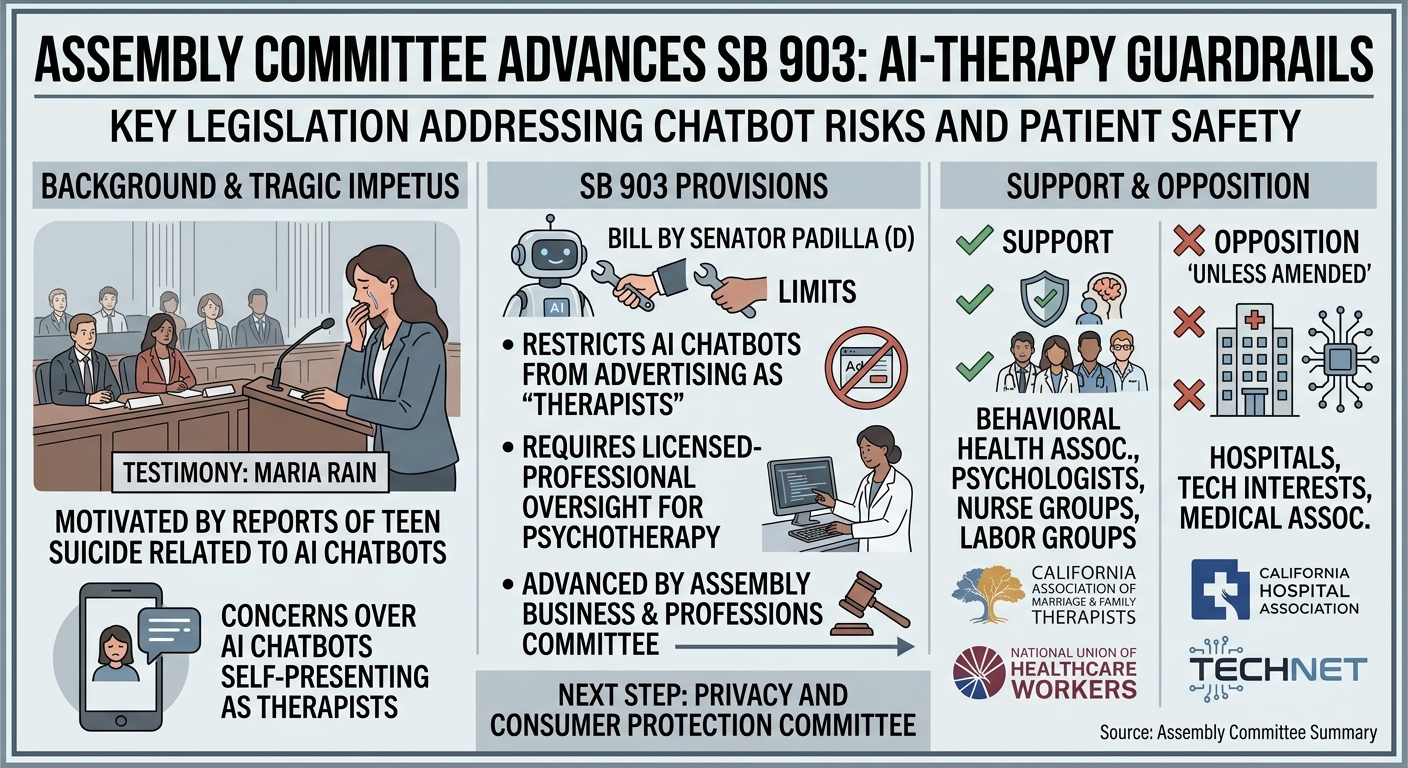
SB 903 moved to the Privacy and Consumer Protection Committee after emotional testimony from a witness who said her son died by suicide following interactions with ChatGPT.
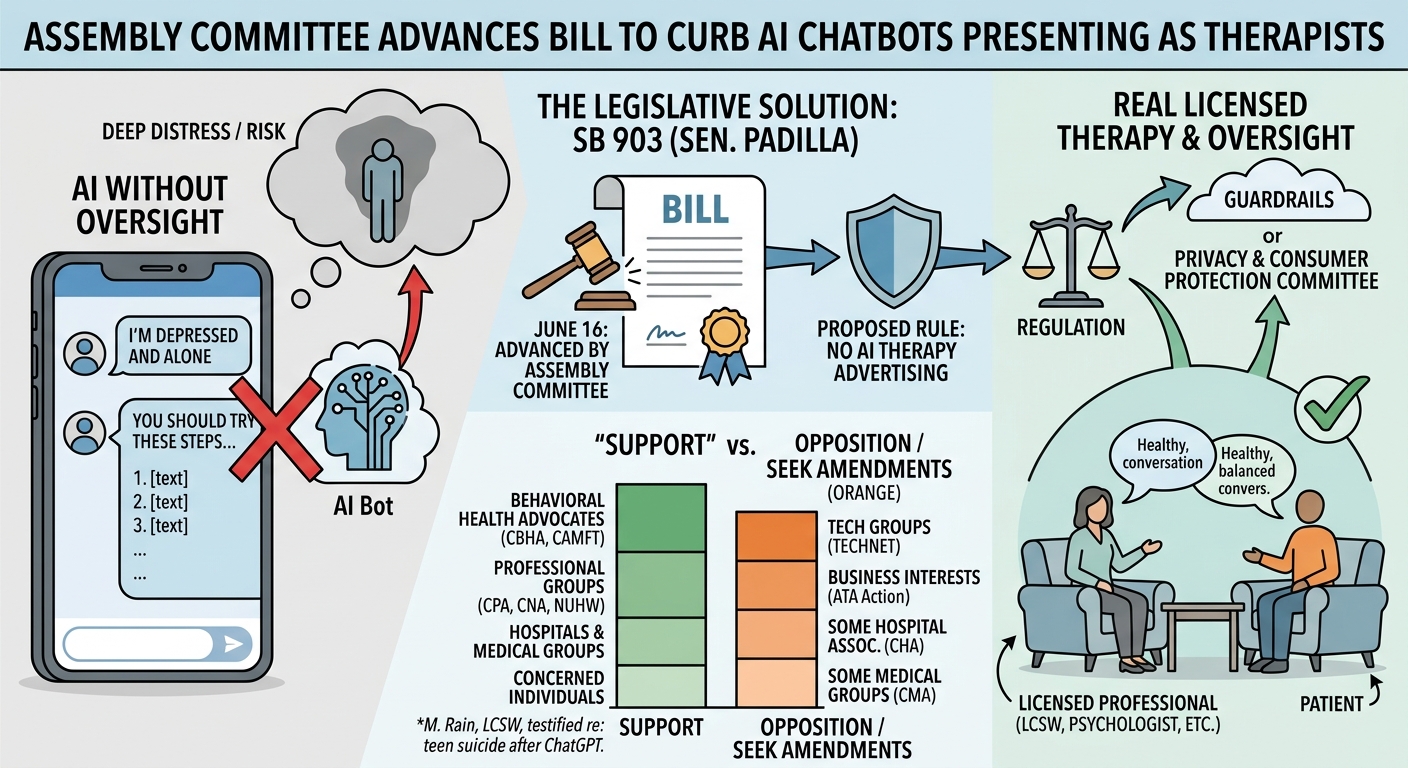
SB 903 moved out of the Assembly Business and Professions Committee and now heads to the Privacy and Consumer Protection Committee.
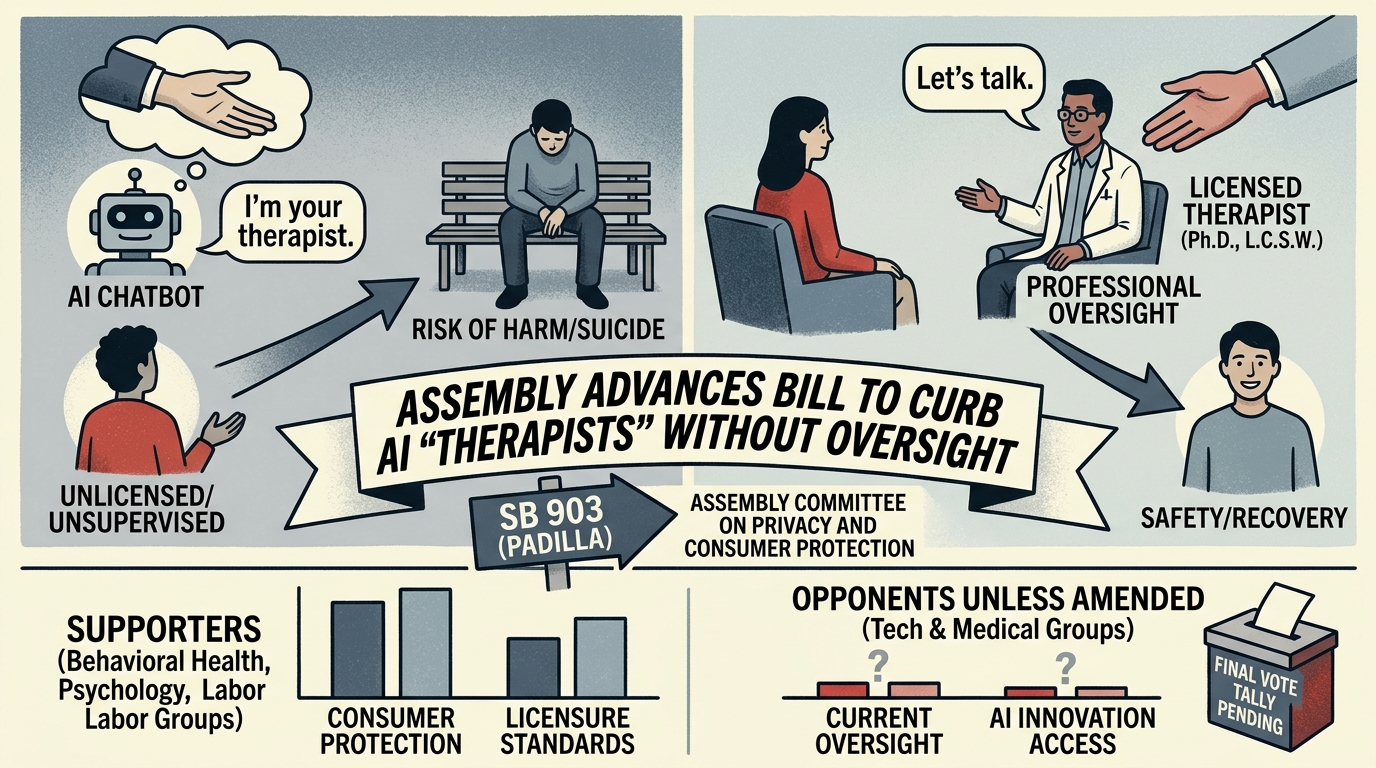
SB 903 would bar AI systems from presenting themselves as therapists or offering psychotherapy without licensed-professional oversight as it heads to the Privacy and Consumer Protection Committee.
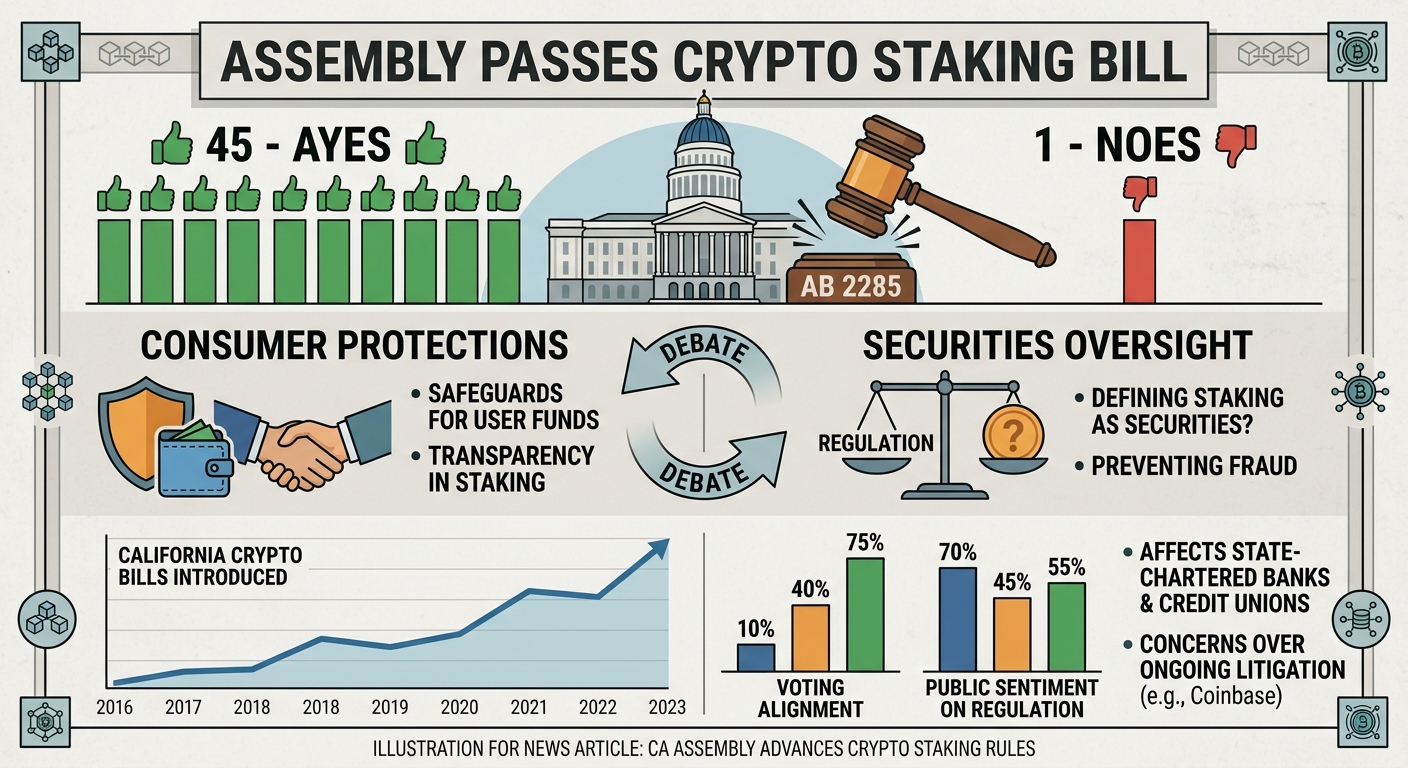
AB 2285 advanced from the Assembly floor on a 45-1 vote after members clashed over consumer safeguards, securities questions and whether the bill could affect ongoing crypto litigation.
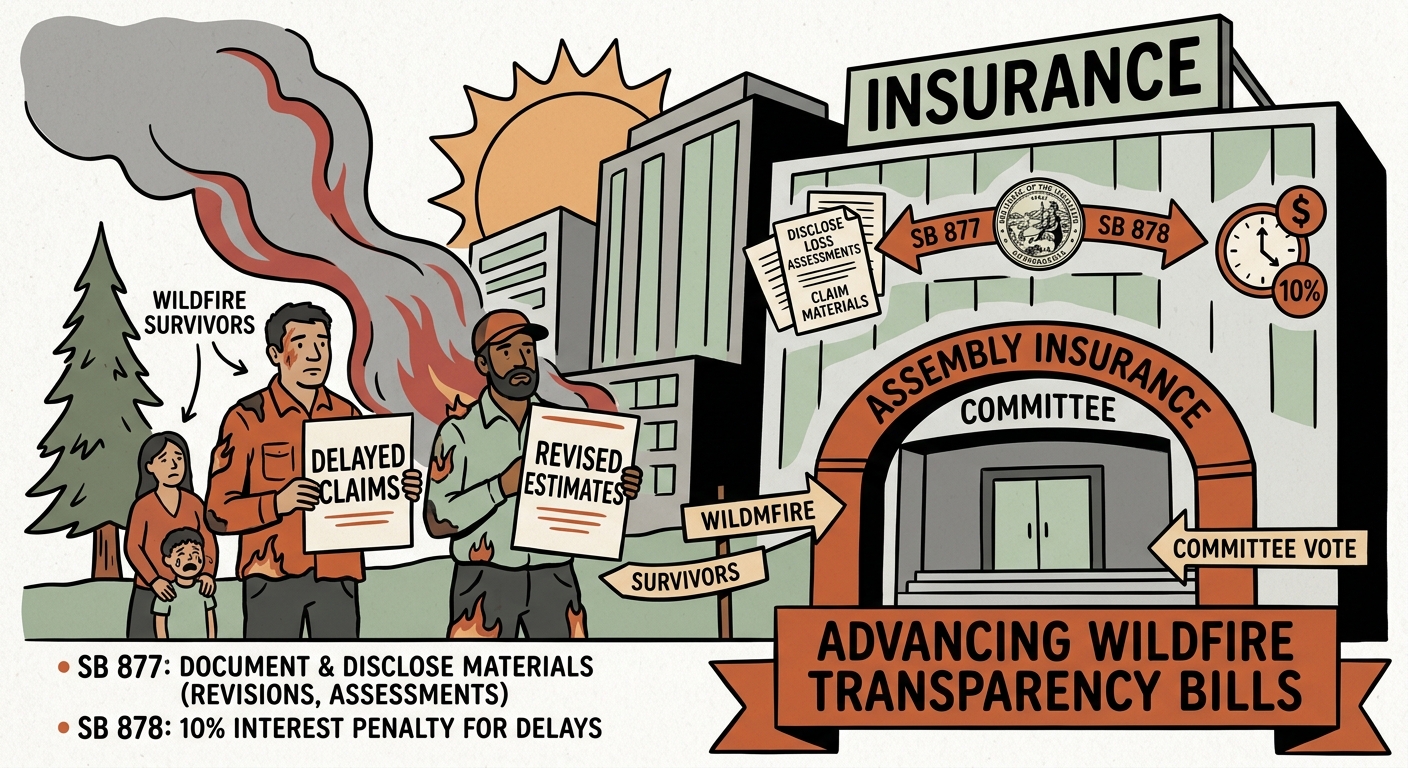
After wildfire survivor testimony, the committee moved SB 877 and SB 878 forward on June 17.
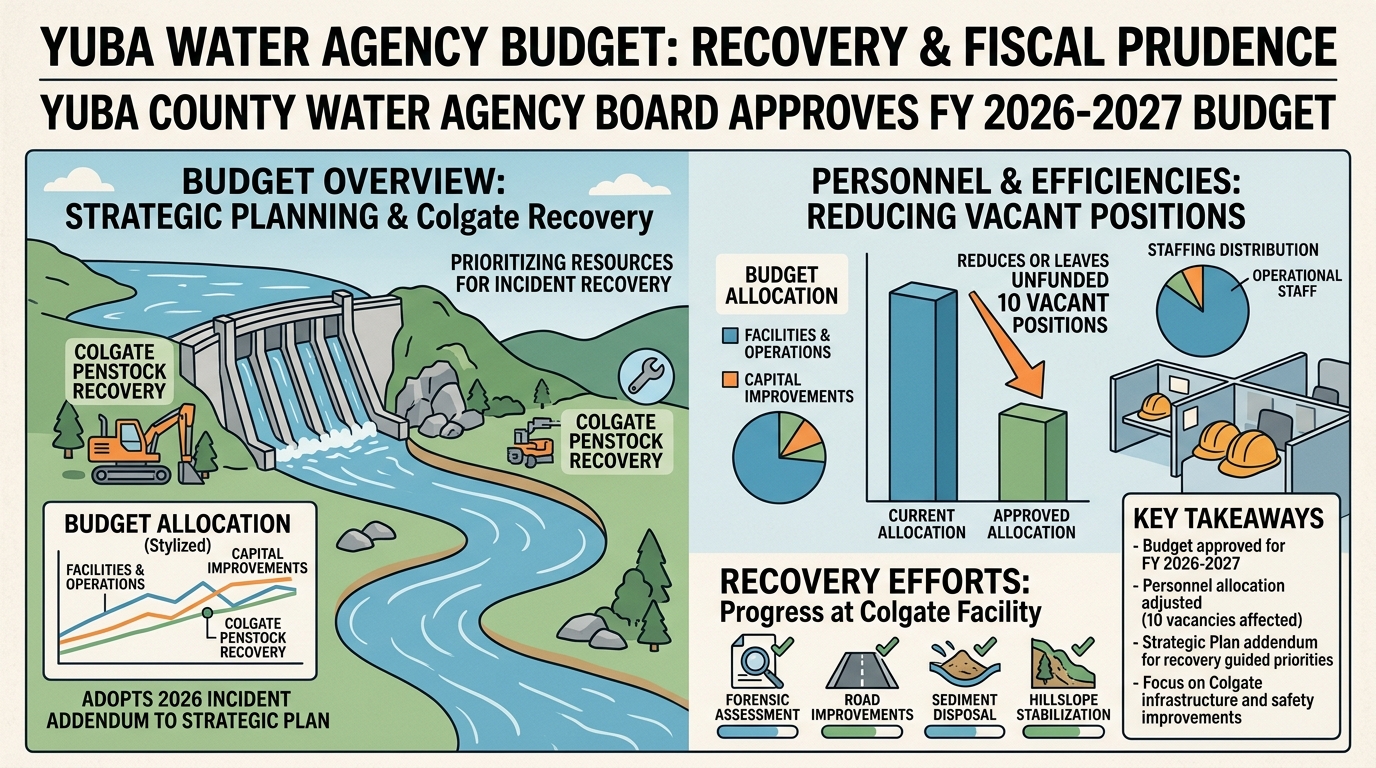
Directors adopted the FY 2026-27 budget, updated staffing chart and an incident addendum as Penstock recovery work continues to shape agency priorities.
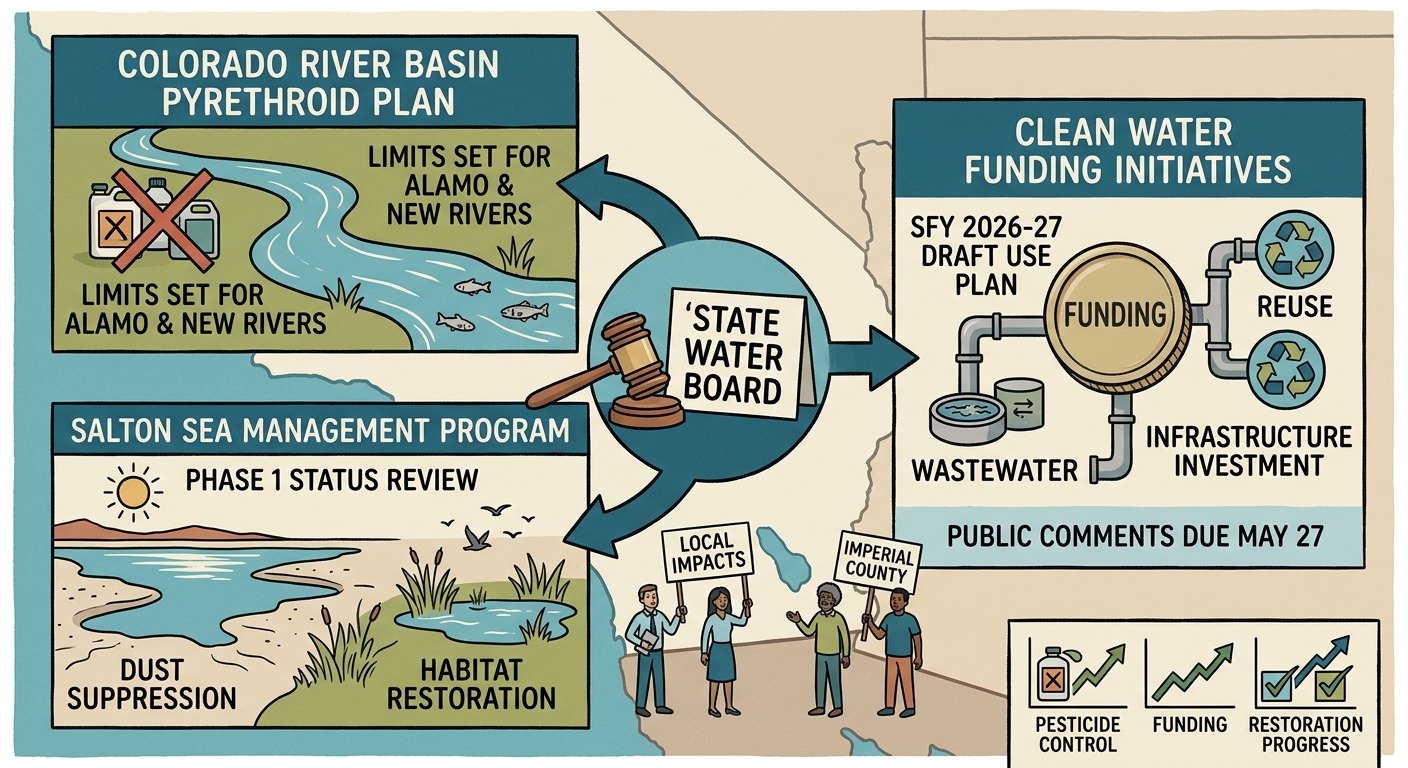
The board approved a new Colorado River Basin cleanup plan and held workshops on the draft 2026-27 Clean Water State Revolving Fund plan and Salton Sea Phase 1 status.
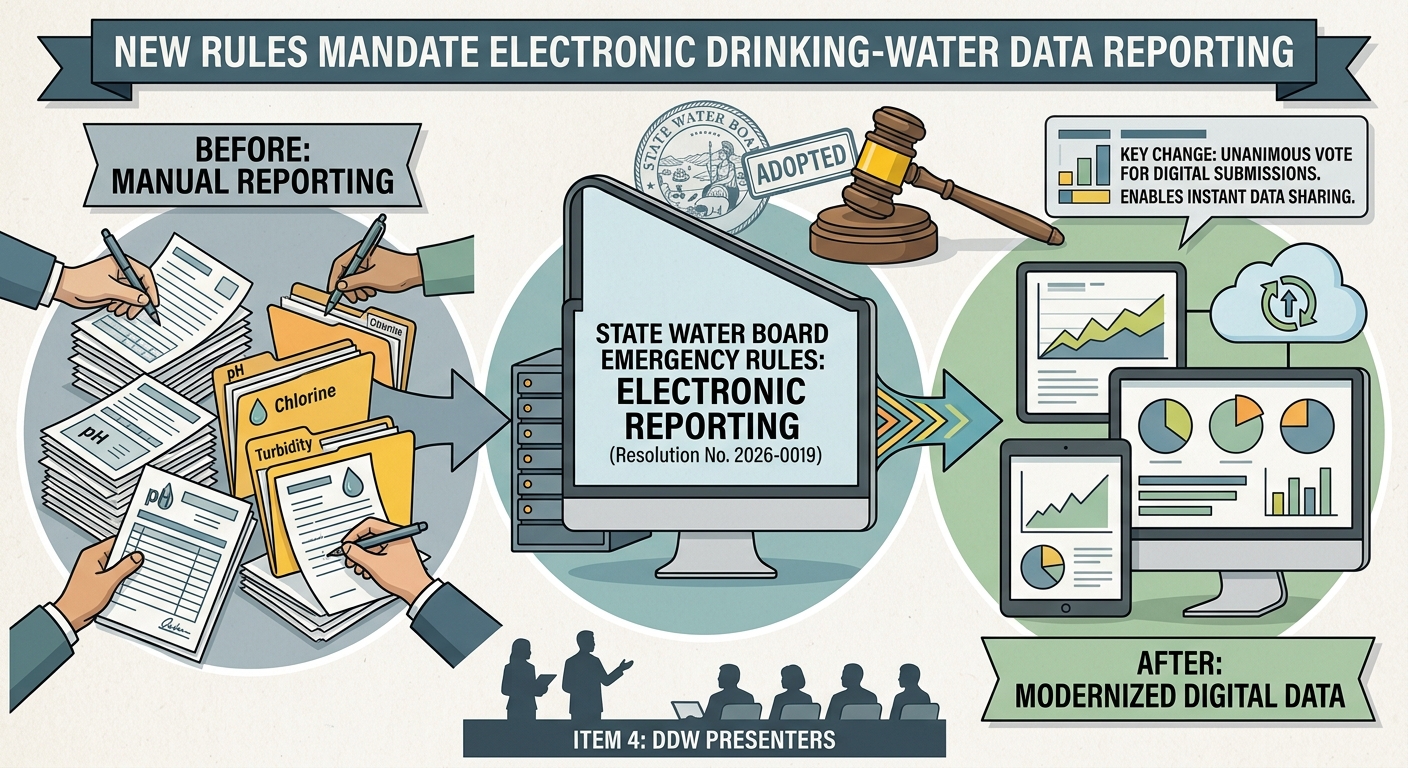
The board unanimously approved emergency regulations that will change how drinking-water quality data are reported electronically, according to June 2-3 meeting minutes.
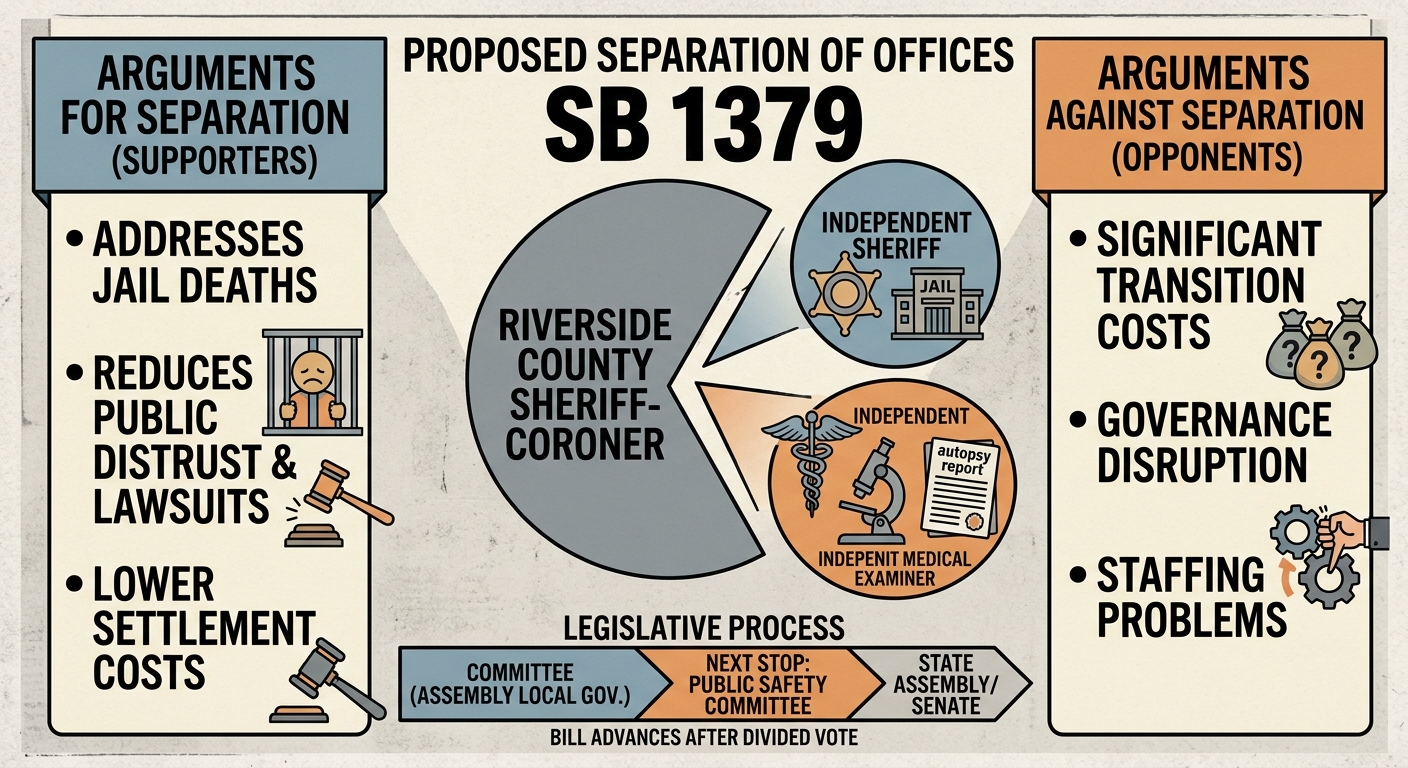
SB 1379 advanced June 17 after divided testimony on in-custody deaths, costs and county governance.
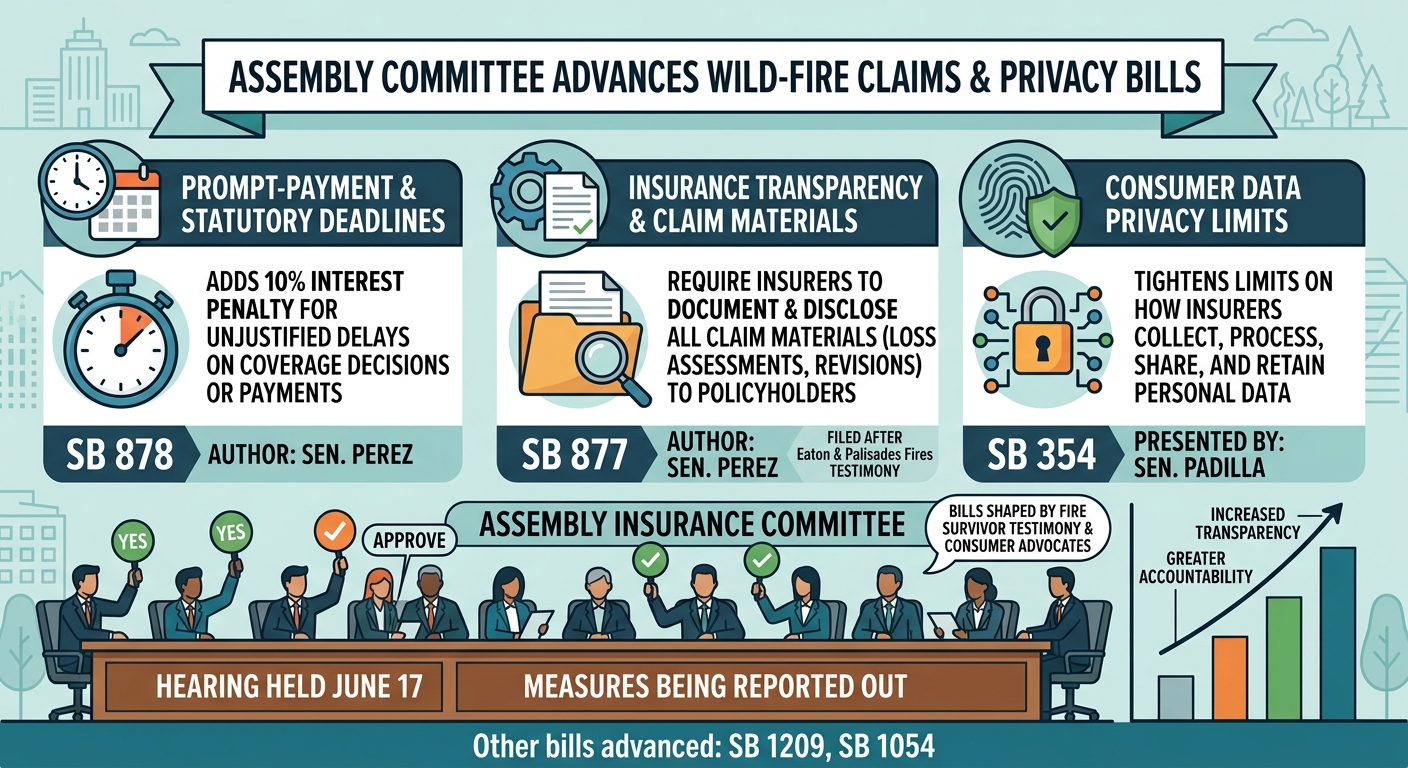
The June 17 hearing moved several insurance bills forward after testimony from fire survivors, consumer advocates and industry groups.

The Assembly Education Committee sent the bill to the next committee after a 6-1 vote following an initial hold, advancing a proposal affecting school-linked sexual-health access for grades 7 through 12.
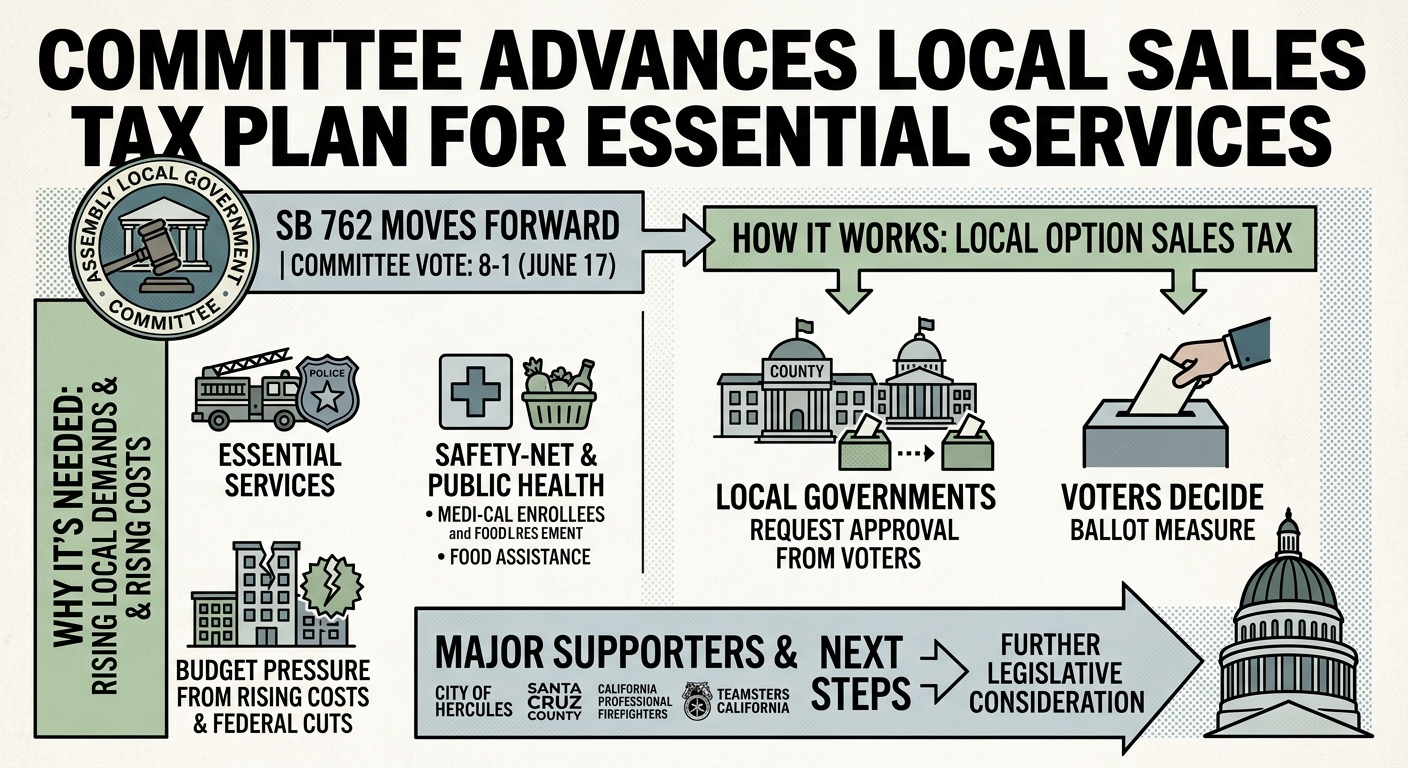
Supporters said the measure would give some cities and counties another option to protect core services as budget pressure grows.
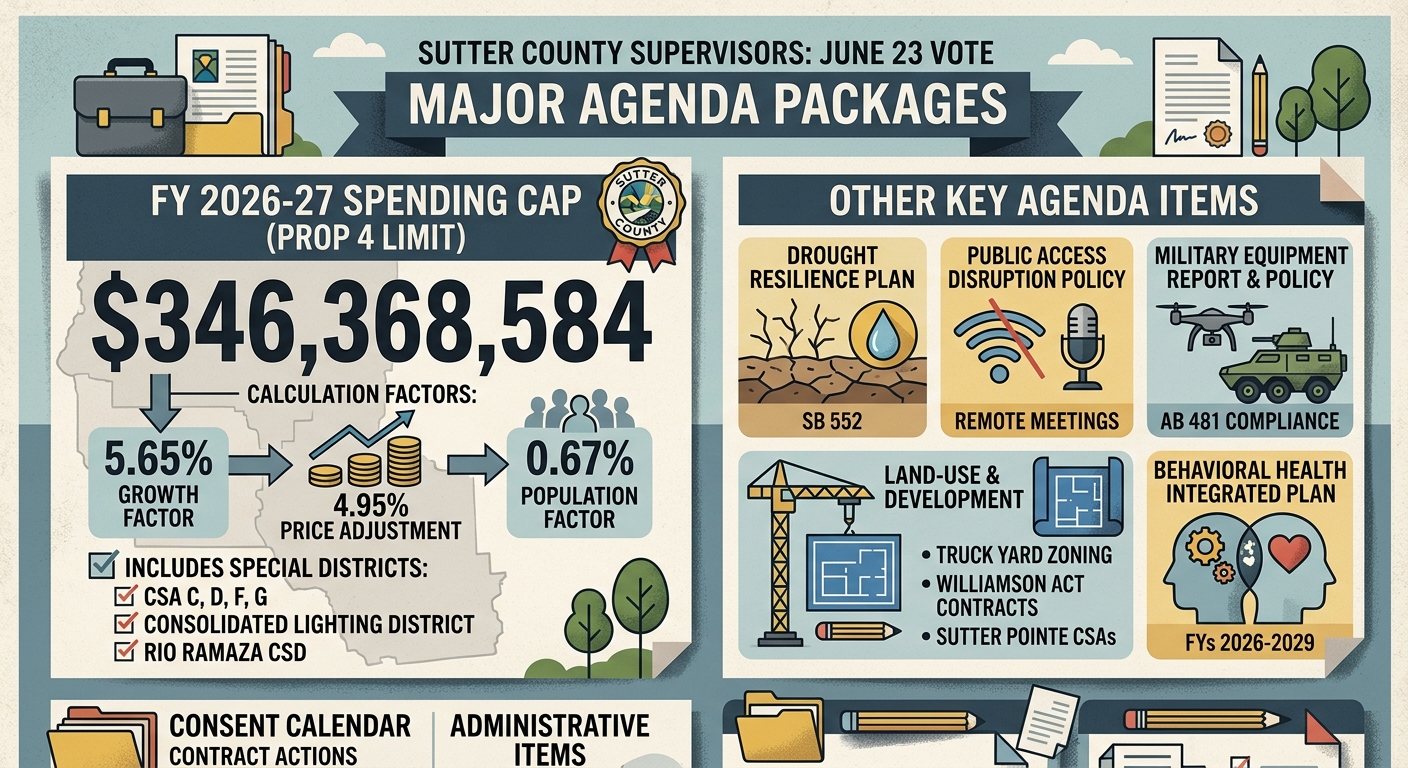
The board agenda bundles the county’s annual appropriations-limit action with the FY 2026-27 budget resolution, a drought plan, AB 481 compliance items and several land-use decisions.
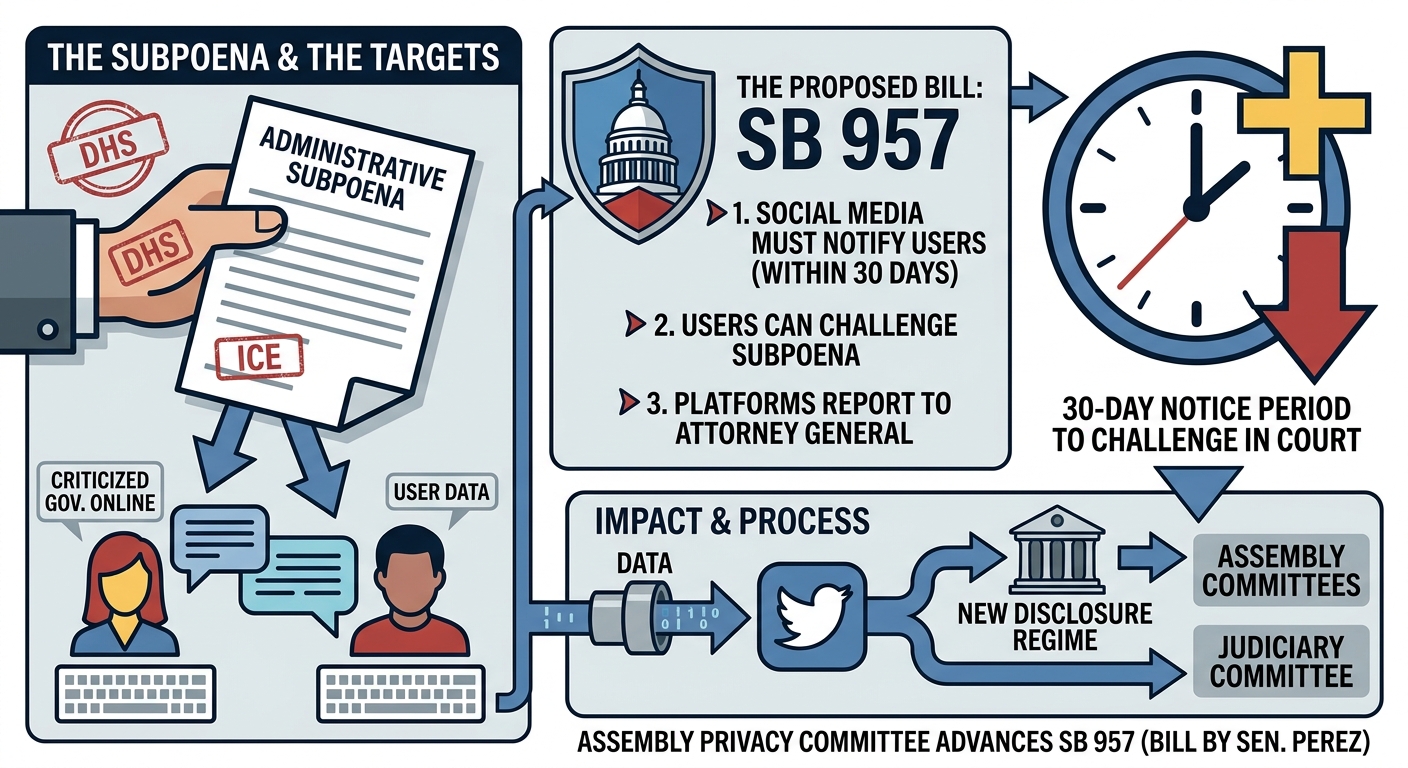
The measure would require platforms to notify users when federal agencies seek their data with administrative subpoenas and give them 30 days to respond or challenge.
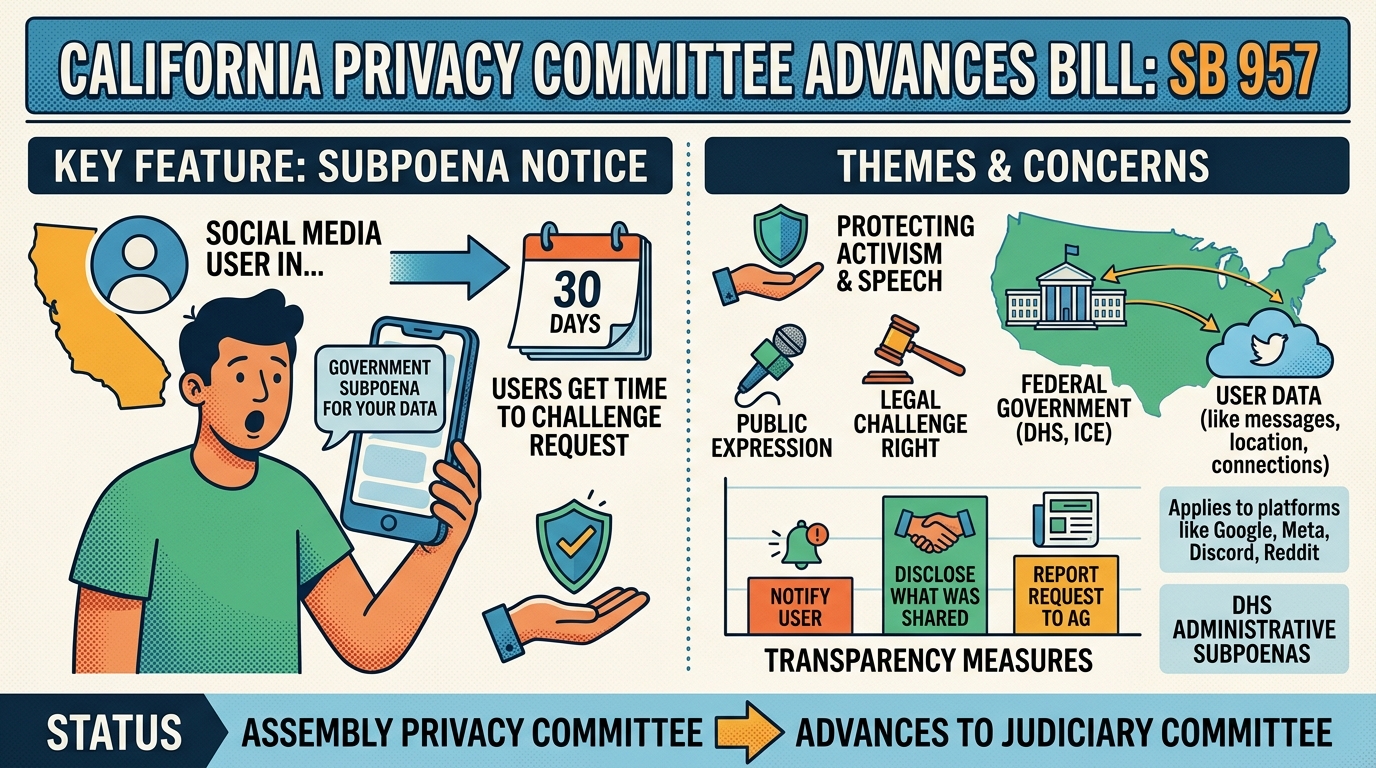
SB 957 would require platforms to notify users when federal agencies seek their personal data through an administrative subpoena and give them 30 days to respond or challenge.